ECONOMY
As Seen from the Field: How Ownership Concentration Is Reshaping Live Music
Reset! network & Live DMA
14 September 2026
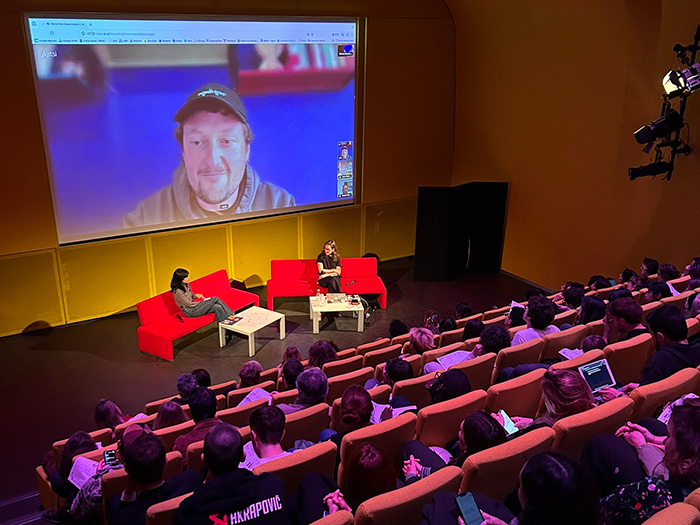
On May 6th, 2026, Reset! and Live DMA co-presented a panel discussion at La Gaîté Lyrique (Paris, France) on ownership concentration in the live music sector. The discussion followed the publication of two European ownership maps, commissioned by Reset!, Live DMA, and the SMA (France’s Syndicat des Musiques Actuelles) and created by researcher Matthieu Barreira.
The panel brought together three representatives from across Europe: Tamás Kádár, director of the Sziget Festival in Budapest; Sébastien Desprez, co-founder of the Magma collective and agency in Brussels; and John Rostron, director of the Association of Independent Festivals (AIF) in the United Kingdom. Drawing on their respective experiences, they described how ownership concentration is reshaping the sector and highlighted its concrete consequences for their operations.
Redefining Festivals: From Cultural Events to Portfolio Assets
This conversation first reveals that two distinct conceptions of the nature and value of music festivals exist within the sector. For many actors, a festival is first and foremost a cultural event that brings people together around music. Its value lies not primarily in financial returns, but in its contribution to society: supporting cultural diversity and accessibility, improving social life, and reinforcing community ties.
France’s concept of cultural exception is rooted in this same principle. Culture should not be treated like any other commercial product because its value extends beyond the market. However, once festivals become part of large corporate groups, their financial value often takes precedence.
Sziget is Hungary’s largest festival and also one of the leading multidisciplinary festivals in Europe, with a daily capacity of 90,000 festivalgoers and a history spanning over 30 years. Its cultural, social, political, and economic contribution to its territory is undeniable. Yet, from the view of Superstruct Entertainment, which acquired 70% of the festival in 2017 and the remaining 30% in 2021, this particular asset still represented a financial risk.
“From the headquarters of Superstruct, Sziget was always a risk in their portfolio […] It’s very hard to work with us because we are far away, a different country, with different VAT, different rules, and a regime [the previous Orbán regime] which is very hard to deal with, or was,” sums up Tamás Kádár.
In 2023 and 2024, just two years after Superstruct acquired 100% of Sziget, the festival reportedly generated large losses. The year after, the company released ownership of the festival. Though its cultural and social value was still intact, it had ceased to be a valuable portfolio asset.
Shifting Industry Standards
When a company reaches a dominant position within an industry, it often gains the ability to shape how that industry functions. In live music, this is made possible by what John Rostron describes as the “width” of operations of major players that not only own festivals and venues, but are also promoters, ticket sellers, bookers, and managers.
This phenomenon, also visible in the map “Live Stages in Europe: Who Owns What?”, is known as vertical integration: a business strategy in which one operator controls multiple key stages of the supply chain, allowing it to reduce costs and streamline operations. When a single company controls festivals, venues, ticketing, and artist booking, it gains not only bargaining power but also significant influence over industry standards.
On this matter, John Rostron evokes the changing conditions he believes are faced by food and beverage traders at UK festivals. “If a trader turned up at your festival, you might take 20 to 25% to an absolute max of their money, and they would have the rest.” That was before, he says. Now, he hears that some large players are taking 30 to 35% from these traders, a practice that risks becoming the new industry norm. “If they’re charging 35%, well, why don’t we?”
Shifting compensation standards for suppliers and festival workers can further destabilise a sector already struggling to maintain balance. Yet speakers identified an even bigger concern: the increasing control that large corporations exert over which artists perform where, and under what conditions.
Controlling Line-ups and Choosing Who Gets to Play Where
As mentioned above, several of the largest players in the live music industry operate festivals and venues alongside booking agencies, among other businesses. This gives them the ability to decide not only who performs on their stages, but also where the artists they represent perform.
The practices described by the panel speakers suggest that this control is already being exercised. First, they tend to prioritise artists from their own rosters. As Sébastien Desprez explains, “for a festival where you had 50 slots for emerging artists, now you have 40 slots for those majors and 10 slots for the other agencies trying to put emerging artists on the line-up.”
Second, they seek to prevent their artists from performing outside their own festivals and venues, where they retain full control over booking fees and conditions and thereby preserve scarcity and demand. As John Rostron puts it, “the fact that they own such width through the ticketing, the venues, the promotion means that they take those artists out and completely block those artists. They have huge power and pockets to do so.” As a result, independent festivals are left with little chance of booking them: “[These artists] can’t get anywhere near our events,” he concludes.
The consequences extend well beyond programming. Over time, these practices pose a direct threat to cultural diversity and artistic freedom. Audiences have fewer opportunities to see their favourite artists perform, reducing cultural accessibility, while independent festivals that rely on headliners and mid-tier artists to drive ticket sales face growing challenges. Restricting artists’ touring opportunities also forces audiences to travel further to attend live performances, running counter to efforts to build a more sustainable live music sector.
Stick to One’s Values, Build Alternatives: Stories from Smaller and Independent Players
What future remains for smaller and independent actors? The picture is not as bleak as you may think.
The coexistence between large corporations and smaller actors can sometimes present an opportunity for the latter. As Tamás Kádár explains, Superstruct’s ownership helped the festival survive the COVID-19 pandemic: “In Hungary, there was no state support for the music industry. So that means that we would have had to pay salaries for two years without any turnover. […] Through those two years, Superstruct actually helped a lot.” As Superstruct left, the festival founders eventually regained their independence and full control over the festival’s vision and programme.
Also, in contrast to the strategies pursued by major groups, smaller organisations continue to build alternative networks and promote different ways of working, seeking to remain true to the values that first drew them to live music. “What we tell our artists is to focus on creating the best music they can, to also focus on building a real audience and a true community. And I really think that’s the key today in the music industry, and as an artist,” says Sébastien Desprez.
He goes on to add that current industry dynamics may encourage both artists and audiences to support smaller initiatives. On the artist side, he argues that those who sign with major groups are often removed from their usual touring circuits because their fees no longer match the financial realities of independent festivals and venues, which ultimately distances them from their scene and audience. On the audience side, he points to practices such as dynamic pricing and VIP areas at festivals and large venues as potential drivers of audience disengagement.
Sector-backed support initiatives are also flourishing. Among the most prominent are the redistribution schemes currently being developed in the United Kingdom and Germany that aim to redirect a portion of the revenue generated by large concerts and events towards small, non-profit, and independent organisations through a ticket levy. Networks like Live DMA and Reset! also actively advocate to strengthen the sector, notably through the creation of a European Cultural Observatory, a body whose role would be to monitor market dynamics, produce and disseminate data, and eventually inform future policy decisions.