ANALYSIS
Europe’s live music sector is being politically sidelined at many national or local level while economic pressures intensify
Live DMA
4 May 2026
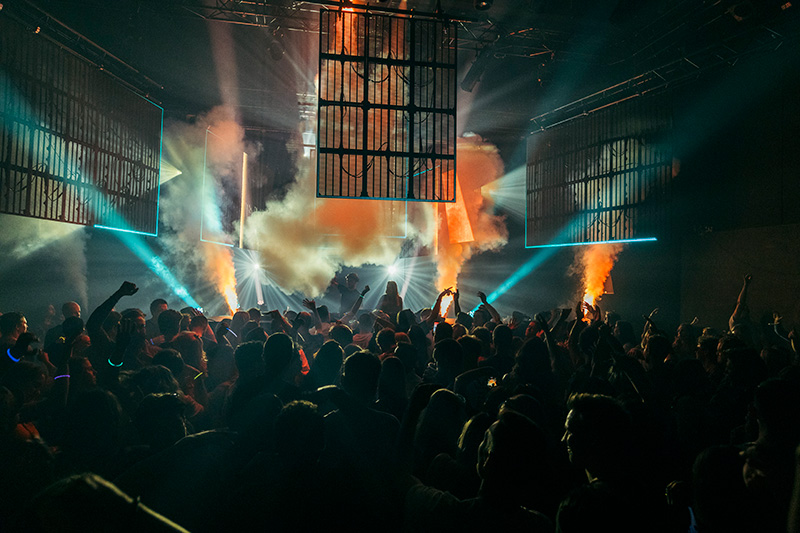
© Stefan Lucassen
Across Europe, live music venues, clubs and festivals are not simply facing a “fragile environment”, they are being progressively weakened by political choices and structural imbalances.
At the end of March 2026, live music representatives gathered in Fribourg, Switzerland, for the annual Live DMA meeting, a timely moment to take stock of the sector’s condition across Europe. What emerged from these exchanges is a steady dismantling of the conditions that allow local music scenes to exist.
Political choices are pushing culture out of the picture
As governments reallocate public spending toward defence and security, culture is being deprioritised. In countries such as Germany, Sweden, Norway or Switzerland, cultural budgets are stagnating or losing ground in real terms.
This has other concrete consequences. In the Czech Republic, policy decisions are actively restricting access to public support for non-profit organisations. In France, the trend is less explicit but also tangible: funding cuts are coupled with a political discourse that increasingly questions the legitimacy of cultural actors, including independent music venues.
Spain currently stands apart, with stronger recognition and dialogue. But this remains politically contingent. With elections approaching, these advances could be reversed, exposing once again how fragile cultural policy becomes when it is not structurally secured.
A deeper imbalance persists across Europe: popular music continues to be marginalised within cultural policy frameworks that favour historically institutionalised forms. In Ukraine for instance, support remains largely directed toward classical music, leaving most of the live music sector outside public frameworks.
In response, parts of the sector, particularly in countries with historically low public support for live music such as Sweden or Finland are forced to compensate. This increasingly shifts the burden onto the sector itself while sidestepping the recognition of music venues as essential cultural spaces and public goods.
Structural protections exist but they are uneven
Where legal frameworks exist, they provide a degree of resistance. Countries like Denmark and France, where music policy has been embedded in law for decades, appear better equipped to withstand political turbulence. What is written into law lasts longer than political cycles. In France, despite a prolonged political deadlock, longstanding mechanisms such as the CNM continue to provide a degree of continuity.
This resilience underscores a broader lesson: legal recognition and statutory frameworks can act as buffers against political volatility. Increasingly, sector representatives emphasise the need to work not only with ministries, but also with parliaments, where measures can be anchored in law and made more durable.
Yet recognition remains inconsistent. In Catalonia, for example, venues are still classified under categories such as casinos or bingo halls, a status that limits their cultural legitimacy. However, in Barcelona, the appointment of a night mayor with sector experience has strengthened institutional dialogue. Elsewhere, progress is also visible. In the Netherlands for instance, nightlife has gained recognition within cultural regulation.
Across Europe, cooperation is emerging as a key response. In Finland and Flanders, stronger alliances within the sector are opening new channels of dialogue with public authorities. But this process is slow, and often outpaced by immediate financial pressures.
Meanwhile, even where funding exists, its real value is declining. Multi-year funding schemes in Belgium or the Netherlands are not indexed to inflation anymore. In Romania, VAT on tickets has increased sharply, while Norway is considering extending VAT to culture. In a context of rising production and touring costs, such measures further constrain the sector’s ability to operate.
A widening gap between national and local support to the music scenes
Support for live music is no longer coherent across governance levels. In some countries, regional authorities are stepping in where national frameworks fall short. Italy illustrates this dynamic, with regions driving policy developments.
Elsewhere, the opposite dynamic is at play. In France or the Netherlands, national systems may appear relatively stable, but local authorities, often under financial pressure too are withdrawing support. This creates immediate risks for venues in those countries where music venues rely primarily on local funding. In the Netherlands, the situation is already critical, with reported financial losses and increasing risks of closures.
This growing disconnect between national and local levels weakens the overall system. Without coordinated policy approaches, even historically stable frameworks are being eroded.
Economic pressure is compounded by shifts in audience behaviour
Alongside political decisions, the sector is facing structural changes in how audiences engage with live music. Declining on-site spending, particularly bar revenues, and a growing concentration of demand around large-scale events are reshaping the ecosystem.
This shift disproportionately affects smaller venues. These spaces are expected to take risks, support emerging artists and invest in audience development, while operating with shrinking margins and limited public backing. Increasing ticket prices is often not a desirable option, which further restricts their capacity to adapt.
Conclusion: a systemic issue that requires political responsibility
What emerges is not a series of isolated challenges, but a systemic weakening of Europe’s live music ecosystem. Political decisions, economic pressures and market dynamics are converging to undermine the very spaces where artistic development happens.
This raises a political question at European level. If defence and sovereignty are central priorities, cultural ecosystems should be recognised as part of that same framework.
This implies moving beyond symbolic support. It requires structured integration of music into European frameworks, including the Cultural Compass, future programmes such as AGORA EU, and the national and regional partnership plans.
It also requires regulatory action. The way economic value circulates within the music sector is not neutral. Without intervention, it continues to concentrate at the top of the value chain, while the foundational spaces are left under-resourced. In this context, sector-led mechanisms are gaining importance. Redistribution tools such as ticket levies are becoming necessary responses to structural imbalance.
Networks such as Live DMA play a role in this, but they cannot substitute for public responsibility. Without clear political commitment, the current trajectory points toward a continued loss of diversity, accessibility and local anchoring in Europe’s live music landscape.