POLITICS
It Feels Strange to be Optimistic
Eszter Décsy
9 November 2026
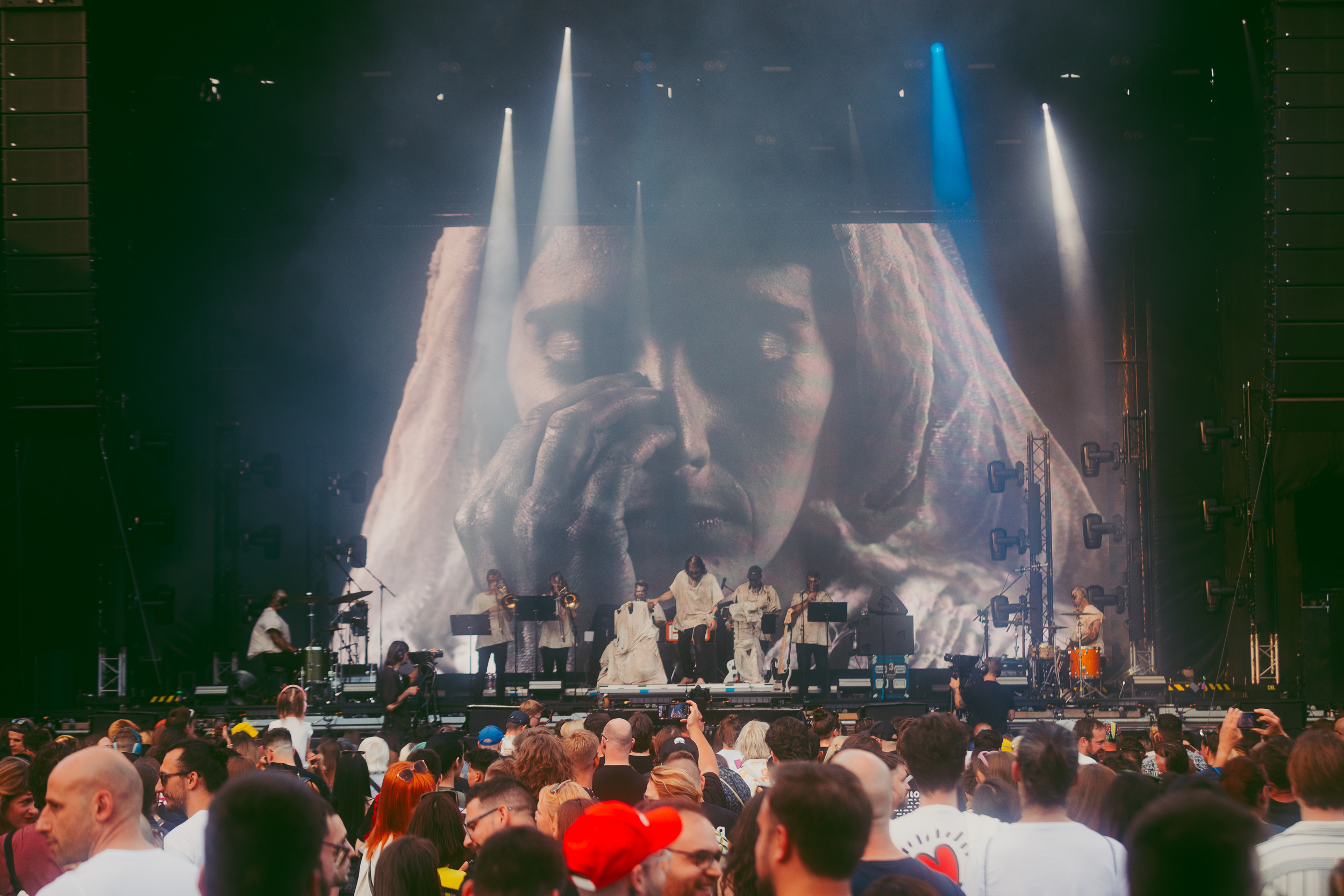
IAMYANK © Sinco
It would be naive to draw any sweeping conclusions after four months of having a new, democratic government. But, rather to my surprise, I’m optimistic. More optimistic than I ever imagined I could be. Within just a few months I’ve gone from utter despair and complete political disengagement, through a kind of euphoria I’ve never felt before, to standing in front of the mirror and saying something quite seriously, without laughing at myself: yes, I can have a say in building a healthy Hungarian music ecosystem and industry that deserves to be taken seriously on a European level.
That hope comes from two directions. On one side, there’s the formation of the new government, the experts invited to take part, their first actions, the state budget deficit falling by many billions of forints in the meantime, and the establishment of an office tasked with recovering stolen public money. On the other hand, and this is really what I want to write about, there’s the fact that, on the written commission of the Deputy State Secretary, two colleagues and I have been able to set up and now coordinate seven working groups of outstanding Hungarian music professionals. Together, we’re drawing up short- and long-term proposals and strategies for the Ministry of Culture (and how wonderful it is to be able to write those words: we haven’t had a dedicated cultural ministry for the past decade). For the first time in a long while, I can see the possibility of institutional mechanisms taking shape that might eventually mean we’ll have an actual, functioning cultural policy. For real.
The Past Two Decades, in a Nutshell
I don’t want to linger too much on the past, but you need to know the context where we started. After a few years abroad, I found myself stuck in Hungary in 2012 and started an online music magazine, then ended up deep in the rabbit hole of the music scene. That put me close to see the changes taking place, then closer, until politics had crawled right under my skin. I was angry, and embittered too. After the previous election defeat, I saw absolutely no future for myself in Hungary and began actively planning another move abroad. No big deal, I’d done it twice already. I could do it a third time.
I can sum up the Fidesz government’s ‘cultural policy’ in a single quote from Gergely Gulyás, the former Minister of the Prime Minister’s Office: ‘The only difference between a football match and a concert is that people drink at one of them.’ That was his explanation for why billions upon billions were poured into football, Viktor Orbán’s favourite sport, every year, and why stadiums sprang up around every corner. That was the first time I packed my bags. In the end, I stayed.
By steadily withdrawing funding, the Orbán government made life impossible for just about everyone and everything, bleeding the sector dry. First it was those who openly opposed the government, then even those who stayed out of politics, because if you weren’t openly with them, you were against them. It was common knowledge that state institutions and government-friendly events kept blacklists, and everyone knew which musicians and performers were on those ever-growing lists. They squeezed independent media and set up the contrived Sovereignty Protection Office, whose sole purpose was to harass NGOs and the independent press. They created a giant event-production company that almost every event was obliged to work with, at inflated prices, naturally, squeezing out independent suppliers and making life even harder for festivals in the process. Last summer, the blacklists became publicly obvious: concerts were cancelled at festivals at the very last minute. I could go on, but I’d rather leave this behind us.
Just When You Think Things Can’t Get Any Worse…
We thought it couldn’t get any worse. Then came the final months before the election. It started with the war on drugs. Drug use was criminalised under what became Europe’s harshest and most harmful drug law in autumn 2025. Then, in December, the Orbán government announced that every music venue was a ‘junkhouse’ and ought to be shut down. At first we could only laugh, out of sheer disbelief. It was so obviously a political stunt. Then came the brutal raid at Pécsi Est (a 500-capacity club in Pécs) in January. On an ordinary Friday night, 260 people were pushed against walls and aggressively searched. They found nothing. We froze.
At the time, I was still actively helping a group of music venues to establish an association. Suddenly, it became clear that there were more venues across the country than we’d known of, and that the authorities really were going after all of them. We wrote a manifesto. We were summoned to a meeting with the government’s drug commissioner, who, in the end, fobbed us off. And music venues were shut down one after another, on allegations alone, without proper, substantive investigations. Ten clubs were closed in total, almost all of them for 90 days during February to the elections. Since Covid, building up any sort of financial buffer has been close to impossible. It’s a miracle they all managed to reopen.
In the final two months before the election, they squeezed another €49 million through the National Cultural Fund (NKA) for a handful of musicians who loudly supported the Orbán government. That’s a sum big enough to be visible on a European scale. In Hungary, it exceeds even the annual sums spent on cultural grants and support. The former culture minister, Balázs Hankó, is currently sitting in custody and still insists that he only supported projects of outstanding cultural merit, even though Orbán himself admitted there had been a political intention behind it.
When a Nation Wakes Up to Its Own Strength and Shakes Itself Awake
In April, we won the election. I say ‘we’ because I felt part of everyone who voted not just for a change of government but for a change of system. There was total euphoria. Then, a few weeks later, once we dared to believe the Fidesz government really was gone, something else began to sink in: the gigantic amount of work ahead of us. We have to rebuild almost everything, particularly healthcare, education and culture, the areas that were abandoned and ruined the most. Skeletons tumble out of the cupboard almost every day.
The state of regional music venues is dreadful. Music education is a disaster. The NKA has failed, and in any case has no money left for 2026: it was all handed out, and has only the funds contributed by the collecting societies. Public media need to be rebuilt from a propaganda machine into a genuine public service. We may have plenty of arenas for artists to play, but that only makes life harder for the grassroots sector. And, just quietly, apart from books, practically every cultural product and service, from concert tickets and recordings to musical instruments and studios, is subject to Europe’s highest VAT rate, at 27%. That’s what we’re trying to build something out of.
The advantage of the present moment, whatever we choose to call it, is that almost anything can be built from here. Of course it will take money and government backing, but the early signs are encouraging. What matters most to me is that we’ve managed to bring together an enormous group of people from across the profession: more than 80 of us are taking part in the discussions. That’s a huge number, and nothing like it has happened before. We’re thinking collectively about the future of the music industry and, more than that, turning those ideas into strategies and concrete proposals.
The first and most important task is to establish a stable institutional foundation, with education and data at its heart. Hungary’s music industry is barely measured at all, yet sound professional decisions need actual numbers. We also need a proper career framework, spanning both musicians and performers and the people working behind the scenes. An institution like this could act as a transparent, two-way link between government and the sector, and it could house the music export office too. Ideally, its funding would be anchored in more than one place. Culture does have economic value; it’s a form of cultural diplomacy and soft power, and an export in its own right. Why shouldn’t this institution have links not only to the Ministry of Culture but also to Foreign Trade and the Ministry of Economy?
I believe one of its first jobs should be to settle the question of cultural status across the whole sector. That would open the way to a 5% cultural VAT rate for as broad a range of eligible organisations and activities as possible, and begin to reverse a system that favours bigger and/or foreign operators over smaller Hungarian ones.
The sector has an enormous opportunity now, and a one-off one at that. If we learn from the mistakes of the previous system, shake off old habits, the cosy networks of favors and deals made under the table, and finally make room for a much wider range of people to do the work, then we might actually make something of it.
We could slow the exodus of young people, even from the more neglected parts of the country, because they’d have places to meet, listen to music and be part of a community. Perhaps they wouldn’t give up after their third solfège lesson, but would pick up an instrument again later on, and actually have somewhere to play it. We’d have skilled professionals with knowledge that could stand out internationally. And then things would be so much better for everyone.
There are a thousand ways we could screw this up, of course. I wouldn’t be Hungarian if I didn’t end on that note. But I think we’ve already taken the biggest step: changing the government, rejecting the far right and populism. From here on, we ‘only’ have to work for ourselves.
PS.: I am warmly congratulating our fellow Serbian friends and colleagues. You did it! You chose to live in a free, democratic country. There’ll be a lot to do to recover, but you are also on the right track. Let’s support each other on the way.