
ECONOMY
Live Music is a Public Good: How Community Ownership Offers a Solution to the Venues Crisis
Sam Whiting
5 March 2026
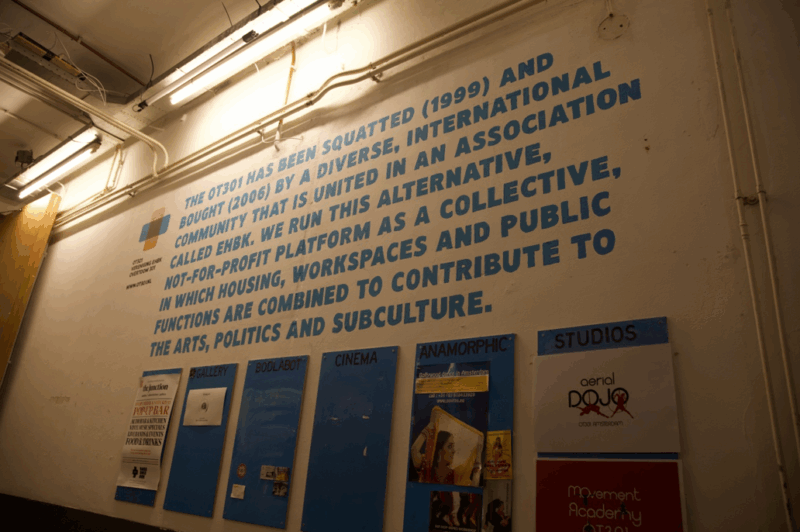
Adjacent to Vondelpark occupying a previously disused arts and film school south-west of central Amsterdam, OT301 is a collectively owned ‘free space’; a multi-arts and music venue run by passionate community members and owned by an association of these members. The venue stands as a testament to Amsterdam’s alternative artistic and political movements, founded as a squat and then later purchased as an exercise in community ownership. OT301’s subterranean venue space hosts an array of regular international artists in a professional, accessible environment and has become a mainstay of Amsterdam’s live music scene.
Venues at Risk
Following the Covid-19 pandemic, live music venues like OT301 have become increasingly threatened as the dual pressures of inflation and changes in audience behaviours have impacted the live music sector significantly. In my home country of Australia, this has been most acutely demonstrated by the collapse of many longstanding music festivals, but venues have also faced significant challenges. Venues that operate out of privately-owned, commercially leased buildings are particularly under threat from rent hikes and potential redevelopment, and lack control over their tenure, which could be ended at any time at the whim of a landlord. Like many places in the world, running a live music venue in Australia has become a tenuous and uncertain practice. However, unlike the venue sector in Europe and the UK, much of the Australian sector is yet to fully comprehend the core issue of market failure facing the sector, and why a market-based approach may no longer be fit for purpose.
Interested in the twin problems of security of tenure and financial sustainability for Australian music venues—and potential solutions abroad—I embarked on a Churchill Fellowship throughout Europe and the UK in 2025, conducting 100 interviews with music industry professionals and venue managers across almost a dozen countries and 100 days. OT301 is just one of the many case studies I encountered, each pointing to various ways of tackling the current crisis of sustainability for music venues. While Europe maintains a long history of public ownership of venues, an increasing trend towards community ownership, particularly in the UK but exemplified by spaces like Amsterdam’s OT301, offers a potentially more robust path to securing these cultural institutions long-term.
Community Ownership of Music Venues
In the UK, Music Venue Properties (MVP), a land trust that has been set up as a charitable, Community Benefit Society (CBS), has successfully acquired several venues, with plans to expand substantially over the next few years, having already gained 1,300 members and over 3 million pounds in community shares. Although not a venue itself, MVP is an innovative and significant fixture of the UK live music environment and is incorporated as a CBS. Community Benefit Societies (CBS) are not-for-profit, collectively owned organizations limited by community shares. They are governed by a principle of ‘one-member, one-vote’. Members invest community shares and elect board members on this basis, regardless of total investment and/or shareholding capacity. This prevents hostile takeovers and makes for more democratic processes and accountability.
Music Venue Properties’ innovative model of collective and community ownership is a radical yet effective way of protecting these venues in the long-term. The CBS structure ensures that these valuable assets are not otherwise subject to speculation by developers, and its diffuse membership-ownership model means that the organisation and its assets are not vulnerable to a hostile takeover. A CBS is also more robust than a standard crowdfunding or fundraising campaign, as investors (i.e. members) have a long-term stake in the organisation and are keen to ensure that the organisation remains solvent and well-managed along with fulfilling its cultural and charitable goals as a community-oriented organisation with a specific mission and purpose.
Community land trusts are increasingly popular in the UK for securing the freeholds to music venues and other multi-purpose arts spaces, as well as protecting important community assets from developers. Stokes Croft Land Trust, which owns a multi-purpose arts space in Bristol called the People’s Republic of Stokes Croft, is also a community benefit society. Incorporating land trusts as charitable CBS ensures that stewardship of these venues remains in community control.
Music Venue Properties serves as an ideal model for collective and cooperative ownership of live music venues, effectively socialising these spaces by taking them out of the private property market. Operationalised through a highly considered and well-resourced mechanism in the charitable, community benefit society model, Music Venue Properties’ mission of crowdfunding community shares and donations with matched funding from philanthropy, the Arts Council and government to purchase and protect venue freeholds is a highly effective way to address security of tenure for venues. Further, other than additional top-up funding from government, the scheme requires little investment or intervention from policymakers to be successful. It is therefore a case study in best practice when it comes to protecting live music venues in the long-term, particularly in the context of a market wherein venues and their freeholds are otherwise highly privatised, such as the UK, Australia, and parts of southern and central Europe. There are many lessons Australian advocates and activists might learn from this model, and it is worth considering cooperative land trusts and other community-owned models for property asset management that might be applicable within the Australian and perhaps European context. However, such initiatives also require community buy-in, democratic control and clear opportunities for effective governance. We can look to the Danish förening model for such an example.
Grassroots Music Venues and Democratic Control
There is a joke in Denmark that you can’t put three Danes in a room without them forming a förening. ‘Förening’ is a word in Scandinavian that translates to association, society, union, or organisation in English. It refers to a group of people or entities that come together for a common goal, which can be social, charitable, sports-related, or even economic, such as a cooperative. Förening are eligible for certain amounts of public support, and this model plays a significant role in the live music ecosystem of Denmark.
This Danish model of subsidised förening provides a decentralised and democratic model for supporting grassroots music venues. The förening (association) allows members to retain a sense of ownership over venues and other musical activities, while the venue leadership have the autonomy and freedom to make executive decisions over the venue and its programming, empowered by its members. The entrenched nature of förening across Danish society and Denmark’s economy means that governments are willing to fund these entities more readily than for-profit venue spaces. There is also a high degree of trust in Denmark generally between individuals, organisations, and governments, which has created a reciprocal and supportive environment for the live music sector. I was particularly impressed by Aarhus, Denmark’s second biggest city, where a diversity of venues, promoters and funded support organisations for the contemporary music sector work in close collaboration with the municipal government to create a vibrant and dynamic live music ecosystem. Here, the local music sector is focused specifically on what the Danes refer to as ‘the growth layer’; that space of emergent and grassroots cultural activity. Such an emphasis on this growth layer, alongside democratic means of control embedded through the föreningen and supported by a system of public funding that serves both musicians and venues has provided Denmark with a robust network of community and publicly curated live music activities.
As live music continues to be impacted by the flow-on effects of the Covid-19 pandemic, as well as increased consolidation via the expansion of multi-national concert promoters and the continued gentrification of the neighbourhoods where live music thrives, opportunities for greater community control offer venues improved security of tenure, certainty, and financial sustainability. Although public entities and funding remain a key component of the live music ecosystem, particularly in the face of an uncertain market environment, community ownership and control offer venue spaces greater autonomy, potentially inoculating them from intervention by rightwing populist movements and potential cuts to cultural funding. Such spaces can also allow for greater local programming, and a bottom-up approach to culture that supports the ‘growth layer’ so well supported in Aarhus. As the landscape of the music sector continues to shift and change, support for grassroots live music that is reliant on neither governments nor markets provide examples of hope and solidarity, but also stability and certainty for the sector.